

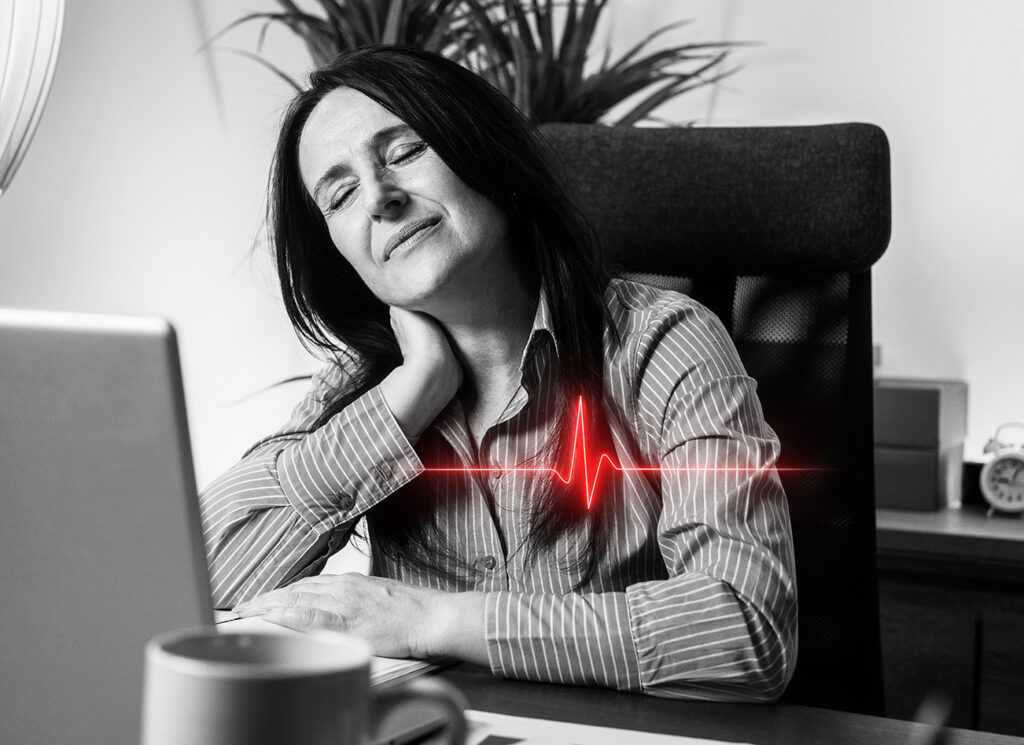
Palpitations are one of the most common reasons people seek cardiology care, yet they’re also one of the most misunderstood symptoms. Patients often worry they’re having a heart attack—or are told it’s “just anxiety.” The truth lives somewhere in between.
What people mean when they say “palpitations”
“Palpitations” isn’t a diagnosis. It’s a word people use to describe a feeling. That feeling can show up in different ways, including:
- Fluttering in the chest (often described as a fish flipping)
- Skipped beats or a sudden “thump” after a pause
- Racing out of nowhere, even at rest
- Pounding or forceful heartbeats when you’re not exerting yourself
Two people can experience the same heart rhythm and describe it completely differently. That’s one reason palpitations deserve careful attention rather than quick assumptions.
The heart’s electrical system—plain English
Think of your heart like a house with electrical wiring. A normal heartbeat starts in the heart’s natural pacemaker and travels along set pathways, telling the heart muscle when to squeeze.
Palpitations generally fall into one of two buckets:
- A normal electrical system reacting to triggers
Stress, caffeine, dehydration, poor sleep, and hormones can all temporarily “rev up” a normal heart rhythm. - An electrical misfire or short circuit (arrhythmia)
Extra beats or abnormal loops can cause rhythms that repeat, stop abruptly, or feel very different from normal stress responses.
The challenge is that both can feel dramatic.
Why palpitations are especially confusing in women
Palpitations affect both women and men, but women are more likely to hear:
- “It’s anxiety.”
- “Your tests look fine.”
- “Try sleeping more.”
Stress can absolutely trigger palpitations—but stress alone is not a diagnosis. Hormonal shifts (perimenopause, menopause, pregnancy, postpartum changes, thyroid fluctuations) can amplify heart sensations or make borderline rhythms much more noticeable. That doesn’t mean the rhythm isn’t real.
Women also tend to describe symptoms more broadly—fluttering plus shortness of breath, lightheadedness, or a sense of panic—while men more often say, “My heart is racing.” Different language, same possible underlying issue.
Are palpitations dangerous?
Many palpitations are benign, meaning they’re not life-threatening or damaging the heart. But “benign” doesn’t mean imaginary or ignorable. Some benign rhythms are extremely uncomfortable and disruptive.
Other palpitations signal arrhythmias that deserve treatment—especially if they’re frequent, intense, or associated with concerning symptoms.
The key takeaway
Palpitations are a symptom, not a verdict. They’re your heart’s way of saying, “Pay attention.” The goal isn’t to panic or dismiss—it’s to understand what kind of palpitations you’re having.
In the next posts, we’ll break down common triggers, warning signs that suggest a rhythm problem, and how cardiologists actually figure out what’s going on.
Call 352-504-3500 or request an appointment at www.tc-heart.com to schedule a palpitations or rhythm evaluation with Dr. Pedro Adrover at Tri County Heart Institute.
Medical disclaimer: This article is for education only and does not replace medical advice. Seek emergency care for severe symptoms.