
By Shelbie Hileman, DNP, APRN-BC, FNP-C for Tri County Heart Institute
Don’t let poor sleep damage your heart health. Schedule a comprehensive cardiovascular rhythm assessment at Tri County Heart Institute today.
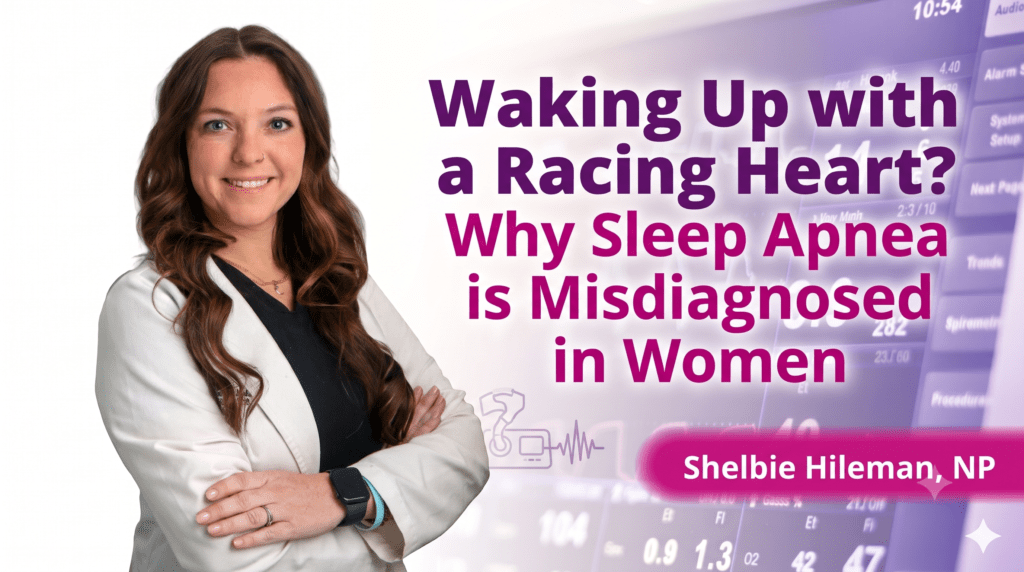
When most people think of Obstructive Sleep Apnea (OSA), they picture a highly specific stereotype: a loud, heavily snoring man who wakes up gasping for air. This classic image has dominated both medical textbooks and popular culture for decades. Unfortunately, this narrow focus has created a massive, dangerous clinical blind spot for women. Millions of women living with sleep disorders remain completely undiagnosed, navigating life under a cloud of chronic exhaustion without ever realizing their nighttime breathing patterns are directly placing their cardiovascular systems in jeopardy.
At Tri County Heart Institute, serving patients across The Villages and Leesburg, our core guiding principle is that women are not just smaller men. This truth is profoundly evident when analyzing sleep disturbances. While men often display “classic” obstructive signs like thunderous snoring or visible breathing pauses noticed by a partner, women frequently present with highly subtle, atypical symptoms. Instead of loud snoring, a woman living in Lake County with sleep apnea might report morning headaches, severe insomnia, mood changes, overwhelming daytime fatigue, or a racing heartbeat upon waking up. Because these symptoms can easily mimic generalized anxiety, clinical depression, thyroid issues, or the standard stresses of daily life, many women are repeatedly misdiagnosed or dismissed with a prescription for a sleeping pill or an antidepressant.
The hidden danger of this medical oversight cannot be overstated. Sleep apnea is not merely a sleep quality issue; it is a profound cardiovascular threat. When a person has sleep apnea, the soft tissues in the back of the throat collapse repeatedly throughout the night, blocking the airway. This mechanical obstruction leads to a sudden drop in blood oxygen levels, triggering a severe panic response within the sympathetic nervous system. The brain, sensing a life-threatening lack of oxygen, floods the bloodstream with stress hormones like adrenaline and cortisol to force the body to wake up just enough to take a breath.
For many women, this nighttime adrenaline surge manifests as a sudden, terrifying sensation of waking up with a pounding or fluttering chest. These are not basic panic attacks; they are physical responses to oxygen deprivation. As we explored in our previous July Blog #1 regarding Pacemakers and Women, recognizing how women’s cardiac signals differ from men’s is the vital first step toward obtaining an accurate diagnosis. When a woman’s heart rhythm begins to misfire due to repeated nighttime stress, treating the heart without treating the airway is only solving half the problem. If you are struggling with unexplained fatigue or wake up feeling like your heart is racing, it is essential to advocate for a deeper look into your nighttime cardiovascular health.
Why the Female Presentation of Sleep Apnea Changes Everything
The fundamental clinical issue is that sleep apnea scales differently in the female anatomy. In men, the airway obstruction is often severe and distinct, resulting in long, measurable pauses in breathing followed by loud gasps. In women, the airway collapse is frequently partial rather than complete. This is medically referred to as a hypopnea rather than a full apnea. During a hypopnea, the airway narrows significantly, causing a drop in oxygen levels and a disruption of deep sleep, but without the dramatic gasping sounds that wake up a spouse.
Consequently, a woman may sleep through the night believing she slept fine, yet wake up feeling entirely unrefreshed. Because she lacks the “signature” loud snore, her primary care physician may never suspect a sleep disorder. Instead, her complaints of exhaustion are often chalked up to a hectic schedule, stress, or fibromyalgia. This exact dynamic of dismissing atypical symptoms is what makes female cardiac care so complex. As we outlined in our June blog regarding Dizziness as a Heart Signal, minor anomalies like a momentary head rush are frequently ignored until they develop into chronic issues.
Over time, this lack of diagnosis allows the hidden cardiovascular damage to accumulate. Every single time a partial airway collapse occurs, the heart must work twice as hard to pump oxygen-depleted blood to vital organs. The constant shift from deep sleep to light, panicky arousal keeps the body in a permanent state of fight-or-flight, elevating daytime blood pressure and destabilizing the heart’s natural pacemaker.
Protecting the Electrical Health of Your Heart
The heart’s electrical system is incredibly sensitive to changes in its microenvironment, particularly oxygen levels. When sleep apnea remains undiagnosed, the chronic, nightly cycles of oxygen deprivation and adrenaline spikes wear down the heart’s electrical pathways. This can eventually lead to permanent rhythm damage.
If a woman is already experiencing minor heart palpitations or mild irregular rhythms, undiagnosed sleep apnea acts as an accelerant, turning an occasional flutter into a persistent medical issue. We touched upon this baseline relationship between everyday life stressors and heart feedback in our February Blog “Common Triggers for Heart Palpitations”. However, while daytime triggers are critical to manage, chronic nighttime hypoxia is an aggressive internal driver that quietly rewires the heart muscle itself. By addressing sleep quality through a specialized cardiac lens, we can intervene before this wear-and-tear transitions into a chronic cardiovascular disease. Women in Central Florida deserve a care plan that addresses the body as a complete, interconnected system, identifying the hidden triggers that occur while they sleep.e
Educational information only. This article is not medical advice and is not a substitute for a personal evaluation by a licensed clinician. It does not diagnose any condition or recommend any treatment. Device details vary by manufacturer and model – your cardiologist will review the specifics that apply to you. If you are having chest pain, severe shortness of breath, fainting, or other emergency symptoms, call 911.