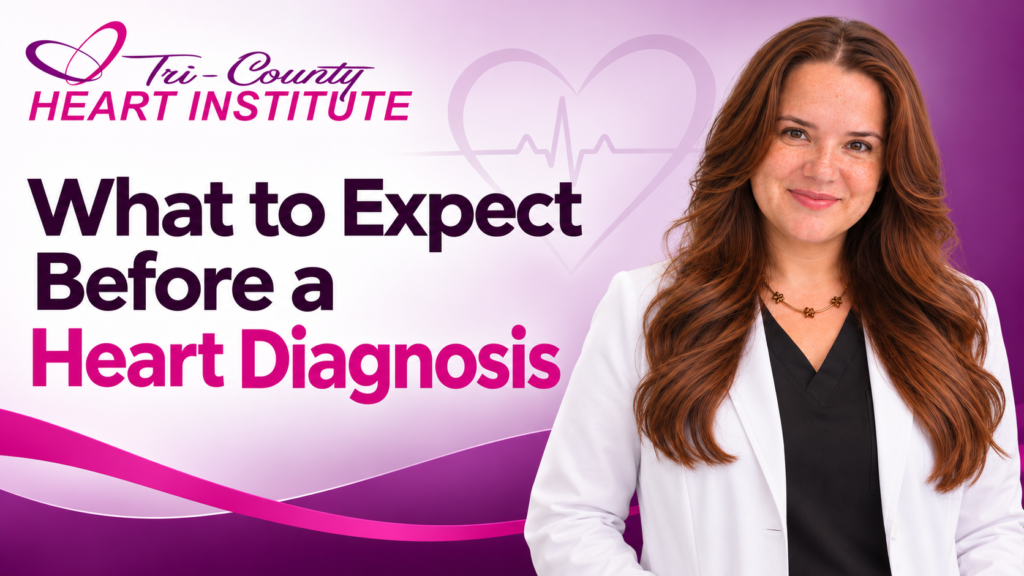
By Rebecca Vann, APRN — Tri County Heart Institute, The Villages, FL
A calm, step-by-step guide to getting answers
If you have noticed something a little off with your heart — a flutter, a stretch of feeling more winded than usual, a dizzy moment — it is completely normal to feel uneasy. I hear it from patients every week, and the first thing I want you to know is this: paying attention to your body is a strength, not an overreaction. Coming in for answers is one of the kindest things you can do for yourself and the people who love you.
Born and raised right here in Sumter County, I take it personally that our neighbors in The Villages feel cared for and never rushed. So let me walk you through what actually happens before a heart diagnosis, in plain language, so the unknown feels a lot less intimidating.
Step One: A Real Conversation
Before any test, we talk. I want to hear your story in your words — what you have felt, when it tends to happen, what makes it better or worse, and what worries you most. We will go through your personal and family history, your medications, and your day-to-day life. This part matters more than people expect. Your symptoms and history often point us in the right direction long before any machine does.
There are no silly questions here, and nothing you share is too small to mention. Sometimes the detail a patient almost leaves out is the one that helps us most.
Symptoms Worth Mentioning
People often wait, hoping a symptom will simply pass. You do not have to wait to be certain before you ask. Things worth bringing up include:
- Fluttering, racing, or skipped heartbeats
- Shortness of breath that is new or getting easier to trigger
- Unusual fatigue that rest does not fix
- Lightheadedness, dizziness, or a fainting spell
- Swelling in the ankles or feet, or pressure and discomfort in the chest
I want to gently add a note for the women reading this. Heart symptoms in women can look quieter — more fatigue, nausea, jaw or back discomfort, or simply not feeling like yourself — and they are too often brushed aside. Carrying forward Dr. Alvarez’s focus on women’s heart health, we take those subtler signals seriously.
What the Testing Usually Looks Like
If we decide testing makes sense, most of it is simple, painless, and done right in our office. Common first steps may include a heart rhythm recording, a wearable monitor you take home for a few days, an ultrasound that lets us watch your heart move, or tests that show how your heart responds to activity. None of this is anything to fear. Think of each test as gathering one more piece of the picture.
And here is the part I love about how we practice: a test result is a beginning, not the end. We believe in answers, not just tests. We will sit with you, explain what each result means for you specifically, and make sure you leave understanding your own heart.
It is Okay to Feel Nervous – You Are Not Alone
Faith and family ground everything I do, and I bring that same steadiness into the room with you. Many patients arrive anxious and leave relieved, simply because someone finally took the time to explain. Whatever we find, you will not face it by yourself. We will make a plan together, at a pace that feels right for you.
Getting checked is not about expecting bad news. It is about replacing worry with understanding — and adding life to your life.
Ready for Answers, Not Just Tests?
If something about your heart has been on your mind, you do not have to keep wondering. At Tri County Heart Institute, we take the time to listen, explain, and walk you through every step — the way we would for our own family. We are right here in The Villages, caring for our Sumter County neighbors.
Call us at 352-504-3500 to schedule, or visit www.tc-heart.com
Tri County Heart Institute • 1501 N US HWY 441, Building 1100, Lady Lake, FL 32159 • Phone 352-504-3500 • Fax 352-504-3388 • info@tc-heart.com
Educational information only. This article is not medical advice and is not a substitute for a personal evaluation by a licensed clinician. It does not diagnose any condition or recommend any treatment. If you are having chest pain, severe shortness of breath, fainting, or other emergency symptoms, call 911.