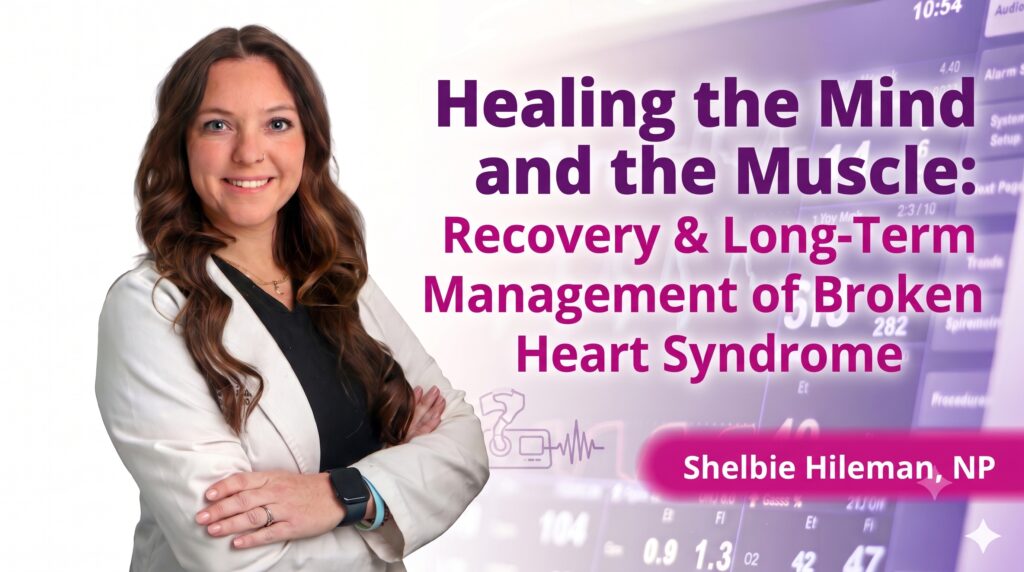
By Shelbie Hileman, Nurse Practitioner — Tri County Heart Institute, The Villages, FL
Reclaim your vitality and peace of mind. Schedule your cardiac recovery evaluation at Tri County Heart Institute today: https://www.tc-heart.com/contact-us/
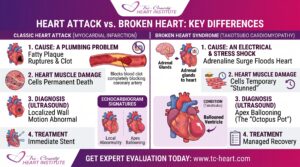
Receiving a diagnosis of Takotsubo Cardiomyopathy (Broken Heart Syndrome) can elicit a complex wave of emotions. On one hand, learning that your coronary arteries are free of permanent arterial blockages provides immense relief. On the other hand, knowing that severe emotional or physical stress physically caused your heart muscle to temporarily fail can feel unsettling and overwhelming. Patients across The Villages, Leesburg, and Lake County frequently ask us: “Will my heart ever return to normal? Could a future emotional crisis cause this to happen all over again?”
The encouraging news is that, unlike a traditional heart attack where dead heart tissue is permanently replaced by rigid scar tissue, the “stunned” heart muscle in Takotsubo Cardiomyopathy has a remarkable capacity for full recovery. With prompt medical management, proper pharmacological support, and dedicated stress-mitigation strategies, the vast majority of women experience a complete restoration of their heart’s pumping function within one to two months. However, achieving lasting stability requires a comprehensive treatment approach that addresses both the physical muscle and the underlying emotional triggers.
During the acute initial phase of recovery, pharmaceutical management plays a pivotal role in shielding the healing heart tissue. Cardiologists typically prescribe a targeted combination of medications designed to reduce the heart’s workload and protect it from lingering adrenaline. Beta-blockers are frequently utilized because they directly block the action of stress hormones on the heart’s cellular receptors, preventing further adrenaline-induced irritability. Additionally, ACE inhibitors or ARBs (angiotensin receptor blockers) are often prescribed to help relax blood vessels, lower blood pressure, and assist the weakened left ventricle in reshaping itself back to its normal, healthy structure.
Equally critical is monitoring for secondary complications during the early healing window. Because the apex of the left ventricle is temporarily paralyzed and ballooned outward, blood can pool in that dormant area, creating a risk for localized blood clots. In certain cases, temporary blood thinners may be recommended until repeat echocardiograms confirm that normal wall motion has returned. Furthermore, as we explored in September Blog 3, the structural strain placed on the heart during a Takotsubo event can temporarily disrupt its delicate electrical grid, sparking irregular rhythms. As we outlined in our baseline guide, “Palpitations—What to Do Next”, tracking heart feedback during recovery ensures that any lingering electrical instability is addressed before it compromises your safety.
Healing the Mind-Body Connection
Because Broken Heart Syndrome is fundamentally catalyzed by profound emotional or psychological distress, true long-term recovery cannot occur purely in a pharmacy. Protecting your heart from future recurrence requires building psychological resilience and addressing the root sources of chronic stress.
For mature women in Central Florida, this means cultivating a proactive, supportive approach to mental and emotional wellness. Implementing evidence-based stress-reduction practices—such as mindfulness meditation, gentle restorative yoga, structured counseling, guided grief therapy, or joining supportive community groups—is not an option; it is a vital component of cardiovascular maintenance. When you learn techniques to modulate your sympathetic nervous system, you effectively lower the height of future adrenaline spikes, protecting your post-menopausal blood vessels from sudden hormonal shocks.
At Tri County Heart Institute, we view our patients as complete human beings, not merely a collection of lab values and diagnostic scans. As emphasized in June Blog #4 regarding the journey to lifestyle stability, achieving lifelong health is an ongoing, collaborative partnership. By pairing advanced cardiac monitoring with compassionate, personalized care, we empower women to heal from life’s deepest shocks, trade anxiety for actionable facts, and return to living their lives with confidence, resilience, and vitality.
Call us at 352-504-3500 to schedule, or visit www.tc-heart.com
Tri County Heart Institute • 1501 N US HWY 441, Bldg 1100, Suite 1106, The Villages, FL 32159 • Phone 352-504-3500 • Fax 352-504-3388 • info@tc-heart.com
Educational information only. This article is not medical advice and is not a substitute for a personal evaluation by a licensed clinician. It does not diagnose any condition or recommend any treatment. Device details vary by manufacturer and model – your cardiologist will review the specifics that apply to you. If you are having chest pain, severe shortness of breath, fainting, or other emergency symptoms, call 911.