
Medically reviewed by Dr. Pedro Adrover, MD, FACC, Tri County Heart Institute
Pacemaker recovery is remarkably fast, with most patients returning home within twenty-four hours. While mild arm movement and lifting restrictions apply for the first few weeks to allow the device to settle, most individuals safely return to driving, walking, traveling, and light recreational activities within four to six weeks.
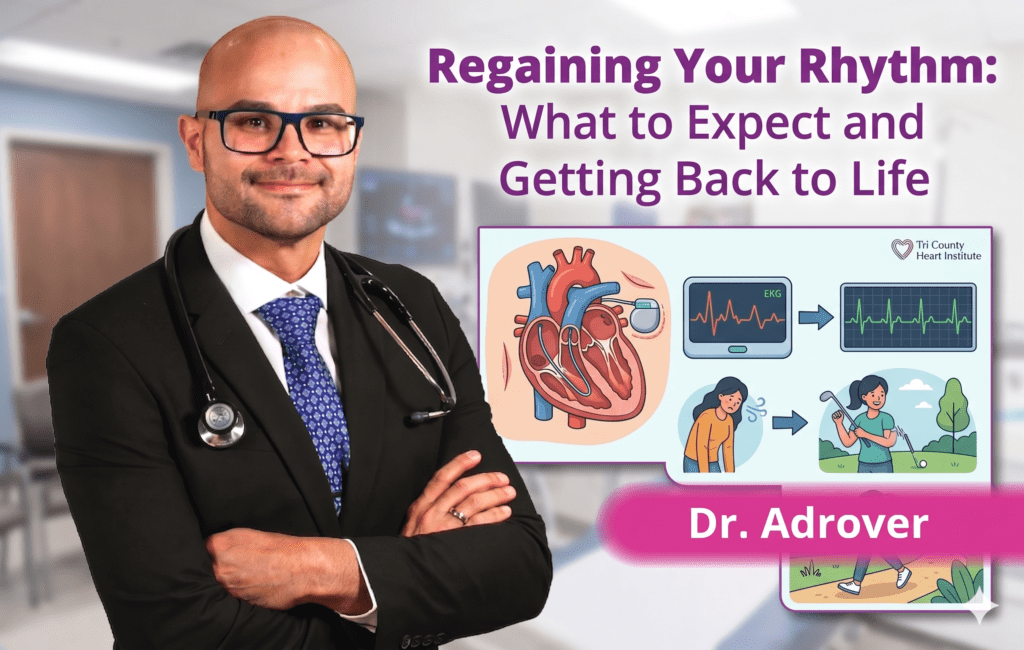
One of the most common questions women ask us about getting a pacemaker is: “What will my life look like afterward?” There is often a fear that a pacemaker means entering a phase of frailty or restriction. In reality, the exact opposite is true. A pacemaker isn’t a limitation; it is an equalizer that allows you to safely return to the lifestyle you love.
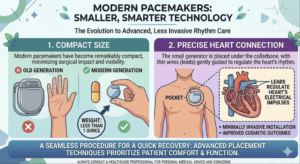
The procedure itself is typically straightforward and minimally invasive, often allowing patients to go home the same day or the very next morning. If you are ready to reclaim your independence from a sluggish heart rhythm, you can schedule a personalized consultation at our nearest clinic location.
In the first few weeks, you will simply need to avoid heavy lifting or reaching high over your head on the side of the device to allow the tiny generator and wires to settle perfectly into place. Once fully healed, the transformation is often remarkable. Women who previously blamed themselves for “slowing down” suddenly find their stamina restored because their brain and muscles are finally receiving a steady, reliable supply of oxygen-rich blood.
Whether your goal is returning to the golf courses of The Villages, enjoying morning walks along the trails in Leesburg, or traveling without the constant fear of a sudden dizzy spell—as we addressed in The Path to Stability: Managing Dizziness and Near-Fainting—a pacemaker provides the steady foundation your body needs. It allows you to move past the frustration of a misfiring heart and look toward long-term stability, a concept we emphasized in our baseline guide, “Palpitations—What to Do Next (A Practical Game Plan)” (https://www.tc-heart.com/palpitations-what-to-do-next-a-practical-game-plan/).
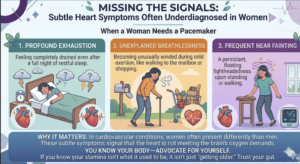
You do not have to just accept a life limited by exhaustion or lightheadedness. If your heart’s natural clock is slowing down, modern rhythm therapy can reset it.
What can I expect during my initial pacemaker recovery?
During the first two to three weeks, you must avoid lifting objects over ten pounds and refrain from raising your elbow above shoulder height on the side of your implant. This ensures the pacing wires remain perfectly stable while the tissue heals.
How soon can I return to activities like golf or swimming?
Most patients are cleared to return to standard, non-contact sports like swimming, golf, and gentle hiking within four to six weeks following a brief post-operative evaluation by their cardiologist.
Contact Tri County Heart Institute today to take back your active lifestyle: https://tc-heart.com/contact-us/
Citations & Sources:
• National Heart, Lung & Blood Institute (NHLBI) – Living with a Pacemaker
• American Heart Association (AHA) – What to Expect After Your Pacemaker Procedure
• Heart Rhythm Society (HRS) – Living with Your Implantable Device: Patient Guide
Medical disclaimer: This article is for education only and does not replace medical advice. Seek emergency care for severe symptoms.